
Invisalign® Clear Aligners Columbus
Flexible, Discreet Braces Designed for Greater Confidence

While much of the discussion surrounding braces involves their level of visibility, many patients assume they are only meant for children and adolescents. The reality is that countless adults want straighter teeth but without the bulky, uncomfortable, and noticeable metal. Whether your child needs braces to fix gapped teeth, or you need help to finally do something about your overbite, Invisalign® clear aligners can offer a flexible, discreet way to ensure greater, daily confidence. Let a member of our team know if you are interested in learning more about Invisalign so that we can help.
What Is Invisalign?
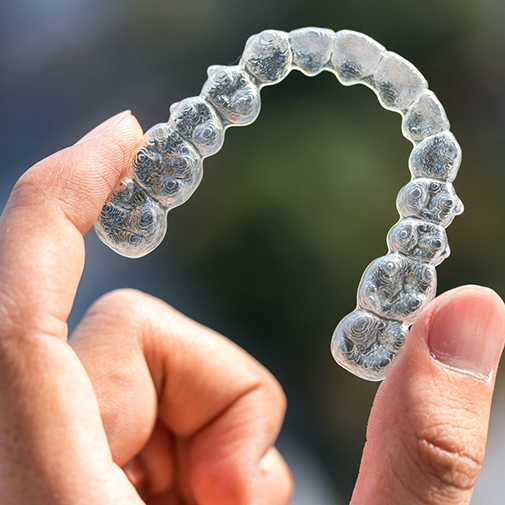
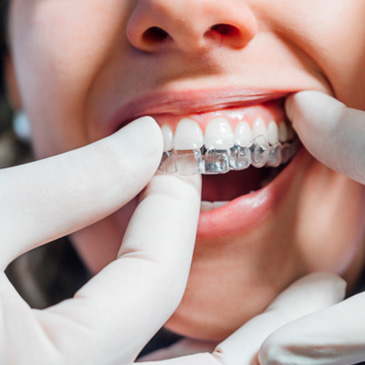
Invisalign consists of customized, clear aligners that gently move teeth in the appropriate direction so that they will line up correctly and produce a healthier, more beautiful smile that works like normal. You will receive a series of trays that you will wear (as a set) for 20-22 hours a day, one to two weeks at a time. When it’s time to exchange them for the next set, you can expect to see a change in your appearance as your smile grows closer to its final destination.
Invisalign Teen

For teens, Invisalign has a unique system that offers the same treatment technique with a few added features that help younger patients stay on track with their Invisalign treatment. Some of the added elements of Invisalign Teen include a few free replacement aligners and built-in tracking technology that allows dentists and parents to determine whether or not teens are wearing their aligners as directed.
How is Invisalign Teen Different?
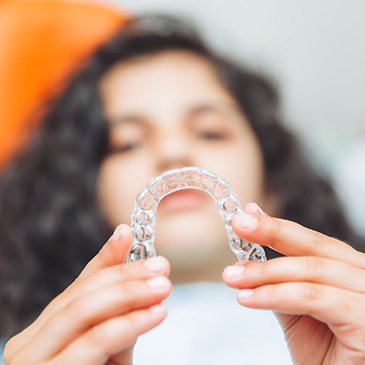
Invisalign Teen consists of blue indicator dots that allow our team to determine how well your child is complying with treatment. These are not found on regular Invisalign aligners, but teenagers can benefit from this accountability tactic. If the aligners are worn correctly – 20-22 hours a day – the blue dot will slowly fade away; however, if the color remains bright and visible, it indicates they are not wearing them as they should.
Another difference between traditional Invisalign and Invisalign Teen is that the latter comes with a few replacement trays. If one is lost or damaged, a replacement tray will be available to help your teen avoid a significant delay in treatment.
Is Invisalign Right for Your Teen?
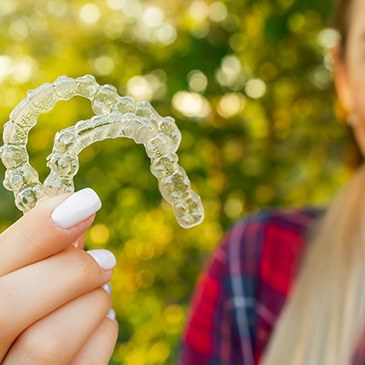
Knowing whether your teenager is right for Invisalign requires scheduling a consultation with one of our dentists. We will carefully examine your child’s mouth and determine if their oral health is in good enough shape to move forward with clear aligner treatment. We’ll also survey the complexity of their dental issues (i.e., bite misalignment, gaps, or crooked or crowded teeth) before deciding whether Invisalign Teen will be sufficient in generating long-lasting results.
Additionally, your teenager must be responsible enough to adhere to the guidelines required with Invisalign Teen. Since these trays are not attached like traditional braces, they must agree to wear them 20-22 hours a day to keep their teeth moving. They’ll also need to protect their aligners by keeping them in a protective case while eating or drinking, or while playing sports or an instrument. Maintaining good oral hygiene is also essential.
We will discuss all of these factors during their consultation, which will allow us to determine if Invisalign Teen is right for your child.
The Benefits of Invisalign Teen

There are many reasons why so many teenagers choose Invisalign to straighten their teeth:
- The aligners are discreet, so they don’t have to worry about their peers seeing them.
- There are no food restrictions, as the trays must be removed before eating.
- The trays are easy to clean, requiring only a soft-bristle toothbrush, clear soap, and lukewarm water.
- Your teen will not have to visit the dentist’s office as often for follow-up appointments. When they do, the visits should not last longer than 30 minutes or so.
- The aligners are custom-made to fit snugly and comfortably.
- Your teen can continue to play sports or an instrument.
Benefits of Invisalign
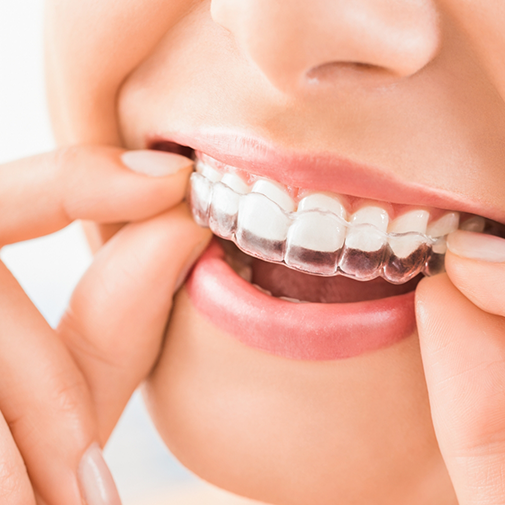
Choosing Invisalign to straighten your teeth or realign your bite can lead to incredible benefits that you will not experience with more traditional forms of orthodontic treatment. That’s why more than 17 million patients have chosen clear aligners! If you’re currently in the process of deciding whether or not Invisalign is right for you, here are a few noteworthy benefits to consider.
Optimal Flexibility

Unlike traditional braces, which are bonded to your teeth and can only be taken off by a dental professional, Invisalign aligners are removable. So, if you want to take them out before a first date, an important presentation at work, or a wedding, you can! All we ask is that you do your best to wear them for at least 20 hours each day. That way, you minimize your chances of falling off-track with your treatment plan.
Greater Comfort

While traditional braces utilize metal brackets and wires that can easily irritate the soft tissue in your mouth, Invisalign aligners are smooth. As a result, many patients don’t experience any irritation throughout their orthodontic treatment!
Tip: If one of your aligners has a sharp edge, you can place some dental wax over it to prevent irritation. You can also bring it to our office so we can file it down, helping it fit more comfortably.
Improved Oral Health

If you’ve had braces in the past, then you know exactly how challenging it can be to clean around the brackets and wires. Unfortunately, this can lead to poor oral hygiene and, consequently, treatment plan delays. As we mentioned above, Invisalign aligners are removable. So, you can take them off and complete your dental care regimen just as you would if you were not undergoing orthodontic treatment.
No Food Restrictions

One of the greatest benefits is there are virtually no food restrictions with Invisalign. The only rule is that your aligners must be removed first to prevent them from staining, breaking, or developing an unpleasant odor. We recommend rinsing them with clean, cool water and then placing them in their designated case for safekeeping until you’re ready to put them back on.
Shorter Average Treatment Timeline
Another considerable perk: the average treatment timeline with Invisalign is only 12-18 months. So, if you’re currently planning your wedding, a dream vacation, or another milestone event, there’s a good chance that you’ll have a gorgeous smile that helps you look and feel your best in time! The key is scheduling a consultation sooner rather than later; we want plenty of time to provide any preliminary treatments that are needed as well as complete any refinements that are necessary.
Fewer Follow-Up Visits
To stay on-track with their treatment plan, patients with traditional braces need to schedule monthly adjustment appointments with their orthodontist. With Invisalign, the progress visits are usually every 6-8 weeks instead. So, if you choose this discreet orthodontic treatment, there’s a good chance you’ll spend considerably less time at our office too!
Living with Invisalign Aligners

Are you curious about what life with Invisalign will look like? Good news: you’re in the right place. In this next section, we’re covering helpful information on how to meet your daily wear time, what to expect at the progress visits, and just about everything in between. Of course, if you can’t find what you’re looking for or you have a follow-up question for us, you can always get in touch with us too!
Wearing Your Trays

Keeping your aligners on for 20 hours a day is a must. If you consistently miss the mark, then your teeth won’t move as anticipated. If your teeth don’t move as anticipated, then you’ll fall off-track with your treatment plan. If you fall off-track with your treatment plan, then it will take longer to get the results you desire, and there may even be additional costs. So, it’s important to get in the habit of only taking your trays off when it’s absolutely necessary, like before brushing your teeth.
Cleaning Your Aligners
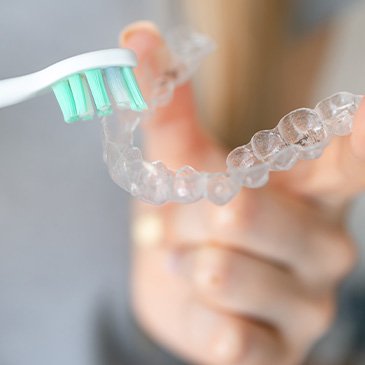
Another important component of life with Invisalign is good dental care. Naturally, that starts with brushing and flossing consistently, but it extends to cleaning your aligners as well. Fortunately, you probably have everything you need at home, like a soft-bristled toothbrush. Just make sure that you don’t use any harsh cleaners, like bleach, since they contain toxins that are not safe to ingest. It’s also important that you don’t use hot water since that can cause the plastic to warp.
Eating & Drinking

Since Invisalign aligners are removable, they don’t come with the same dietary restrictions that traditional braces do. That said, there are some guidelines we provide our patients with. The first is taking their trays off before eating or drinking anything other than water. The second is eating mostly healthy, well-balanced meals to reduce the risk of common oral health problems developing, like tooth decay.
Losing or Damaging a Tray

Both losing and damaging a tray can be panic-inducing because you only have a limited amount of aligner-free time each day. So, it’s important that you find your aligners or call our office ASAP to prevent significant treatment plan delays.
Tip: Anytime you aren’t wearing your aligners, put them in their designated case! That way, you’re significantly less likely to lose or damage them.
Attending Routine Check-Ins
Throughout your teeth-straightening journey, you’ll come to our office so we can take new scans of your teeth. This is a crucial component of the orthodontic treatment process because we need to periodically check if they are moving as anticipated. If they aren’t, then we can determine why that is and make the necessary adjustments to your treatment plan to get you back on-track. If they are, we can give you the next several sets of aligners so you can continue your progress from home!
Who Can Invisalign Help?
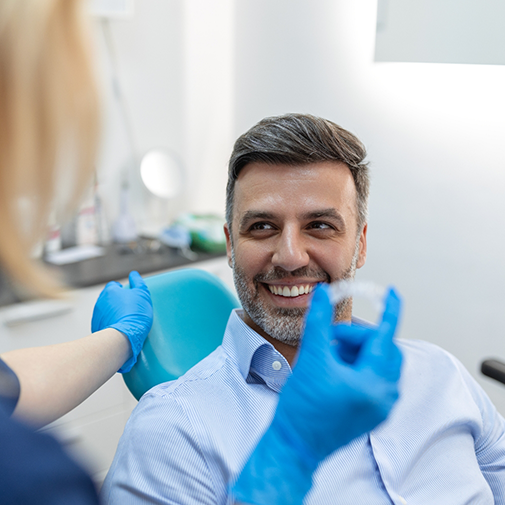
Wondering if Invisalign is right for you? Then take the next step: schedule a free consultation with Dr. Wigal or Dr. Kluemper! That way, they can get a better understanding of your dental history, your oral health, and your smile goals. Of course, if you want to learn more about the orthodontic problems that clear aligners can correct in the meantime, you can read on, too.
Crowded Teeth
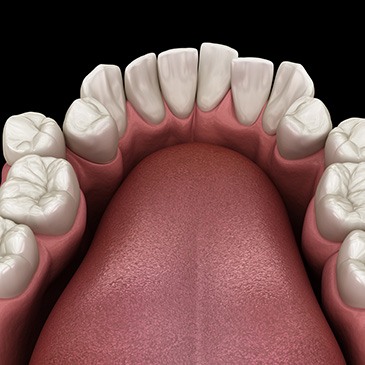
Are you struggling with overcrowding? Unfortunately, this orthodontic problem can lead to everything from low self-esteem to an increased risk of gum disease. For that reason, we encourage patients to explore their treatment options ASAP, like Invisalign. If we decide together that this is the best option, then we will get to work on creating your custom, clear, and comfortable aligners!
Gaps Between Teeth
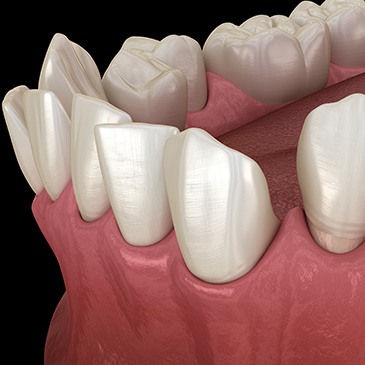
Sadly, even small gaps between your teeth can also increase your risk of common oral health problems, like tooth decay. So, it’s important to pursue orthodontic treatment, even if you are generally happy with your smile. If Invisalign clear aligners are an option, then we can guide your teeth into their ideal positions without drawing unwanted attention to your smile in the process.
Overbite
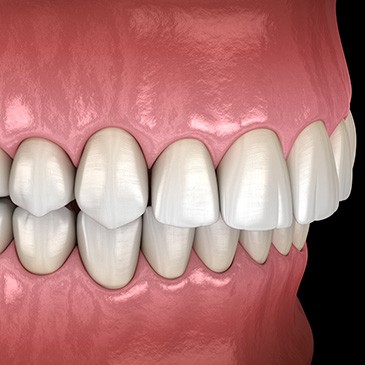
You know that Invisalign can fix crooked and gapped teeth, but can Invisalign fix overbites? Good news: the answer is “yes!” If you choose to proceed with clear aligner treatment, then we will capture an impression of your teeth and send it to a lab, where technicians will begin creating your trays. Before you know it, you’ll be on your way to a straighter, healthier smile.
Underbite
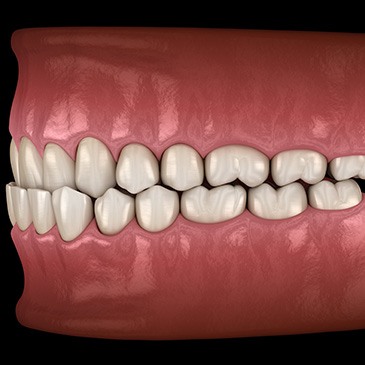
Do your lower teeth protrude beyond your upper ones? If so, you likely have an underbite. Although this orthodontic problem can lead to several issues, including trouble enunciating clearly and chewing properly, there is good news: Invisalign is usually an option for patients with mild to moderate cases. So, if you are ready to take the next step, schedule a consultation at our Columbus office!
Crossbite
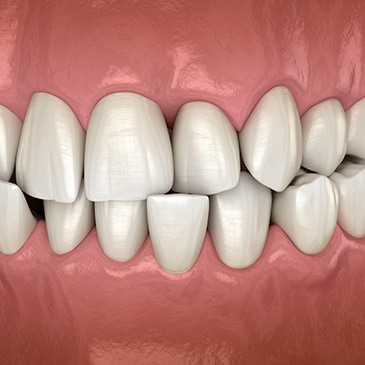
Oftentimes, crossbites aren’t as talked about as the other orthodontic problems on this list, but that doesn’t make them any less serious. In fact, if left untreated, they can negatively impact your smile, your oral health, and more. For all of those reasons, we recommend scheduling an Invisalign consultation with us sooner rather than later.
Open Bite

When you bite down, your upper and lower teeth should meet evenly. If they can’t because there is a space between them, then you may have an open bite. Since this orthodontic problem dramatically increases your risk of dental damage and premature wear, it’s important to have it corrected. Fortunately, Invisalign clear aligners are up for the job!
Understanding the Cost of Invisalign
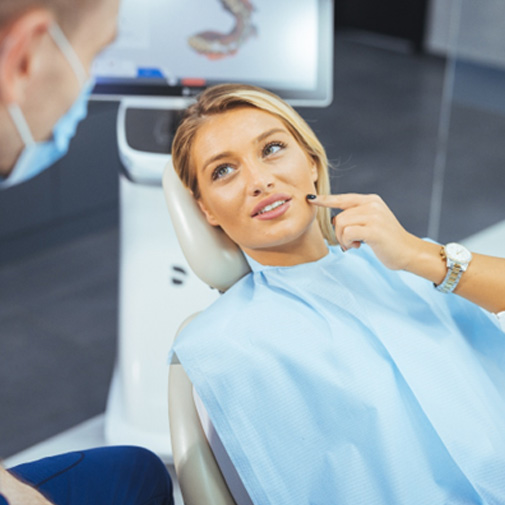
If you’re currently trying to pinpoint the cost of Invisalign, but you’re having some difficulty, it’s because there isn’t a flat fee; the price is different for each patient. The good news is that we can provide you with an estimate at your consultation, and we can also review the financial solutions available, like dental insurance. In the meantime, you can read on to learn more, including the factors that impact the total cost.
Factors That Affect the Cost of Invisalign
After one of our talented orthodontists gets to know you and learns all about your smile goals, they will conduct a comprehensive oral exam. The goal is to learn more about your dental needs, including:
- If any preliminary treatments are needed, like gum disease therapy
- How severe your case of malocclusion is
- If single-arch treatment is possible
- How many aligners need to be made
- If rubber bands or any other orthodontic accessories should be added to the treatment plan
- The type of retainer that’s needed
With all of this information, they can create your custom treatment plan and provide you with an estimate of the cost.
Invisalign vs. Mail-In Aligners: Which Costs More?
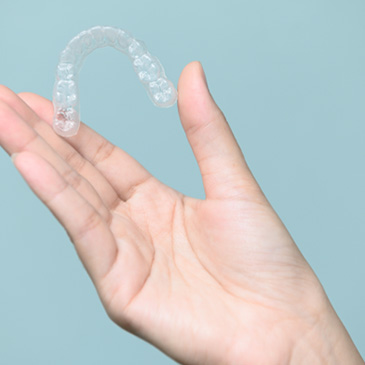
If you’ve seen ads for mail-order aligners, then you know that much of the messaging centers around how inexpensive they are. What they don’t mention, however, is that they skip the initial consultation, they ask you to take your own impressions, and they typically don’t have licensed dental professionals overseeing the treatment process. In fact, there often isn’t anywhere to turn when something inevitably goes wrong! So, even if they are cheaper, they aren’t better (or worth your money).
Does Dental Insurance Cover Invisalign?

You might be surprised to hear this, but there are some dental insurance providers who cover a portion of the cost of orthodontic treatment. So, if you are insured, take a look at the fine print on your plan to see if that’s the case for you! If you need any help, you can count on us. In addition to being an insurance-friendly office, our experienced and knowledgeable team will help you navigate the ins and outs of your coverage so understanding and utilizing your benefits is easy.
Options for Making Invisalign Affordable
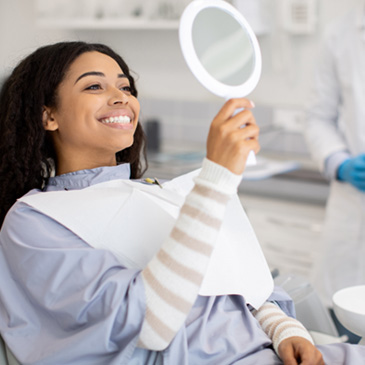
If you are interested in Invisalign, but you don’t have dental insurance, don’t worry – that’s not the only financial solution available. We also:
- Welcome Flexible Financing with CareCredit: With a variety of convenient payment plans, CareCredit allows you to space out the cost of your orthodontic treatment into smaller monthly chunks that work for you.
- Offer Periodic Specials: Our special offers, like a free exam and orthodontic consultation, help you save on your journey to a straighter smile. So, don’t hesitate to ask us about our latest offers when you call to schedule your appointment!
Invisalign FAQs
Are There Any Foods That Are Difficult to Eat with Invisalign?
In the hours following the transition to a new set of aligners, your teeth may feel sore. As a result, eating whole apples, almonds, celery, and other crunchy foods may be difficult. The good news is that there are lots of delicious foods that are softer in consistency, like oatmeal, pudding, bananas, and vegetable soup. Plus, the soreness will subside as your teeth adjust, so you’ll be back to your usual diet in no time!
What Should I Do If My Invisalign Tray Broke?
If you notice a small, hairline crack on one of your aligners, then use them with the utmost care and give us a call if the damage gets worse. Of course, if your aligners have split down the middle or have broken into several pieces, then you should contact us ASAP. The sooner you do, the sooner we can determine if a replacement set needs to be made or if you can move onto the next pair in the series.
Will I Need to Wear a Retainer After Invisalign Treatment?
Yes! If you’re worried, we have good news: there are retainers available that look a lot like the aligners, so they won’t attract unwanted attention to your smile. Plus, patients typically only need to wear them at night to maintain their results, so no one will notice them anyway.
Important note: Orthodontic relapse is the phenomenon when teeth begin to drift out of their perfectly aligned positions, and it happens to upwards of 50% of patients. So, it’s crucial that you wear your retainer as instructed to protect the time and money you invested in the teeth-straightening process.
Does Invisalign Hurt?
According to the patients who have had both traditional braces and Invisalign, Invisalign is considerably more comfortable. Since there aren’t any metal brackets or wires, it’s not hard to see why! Of course, you can expect to feel some soreness as your teeth move into their properly aligned positions, but even that is temporary and can easily be alleviated with OTC pain medication.
How Long Will I Need to Wear My Invisalign Aligners Per Day?
You need to wear your aligners for a minimum of 20 hours each day. At first, having four hours of aligner-free time may sound like a lot, but once you factor in three meals, snacks, and dental care, it’s really not. So, it’s important to be strategic! The key is only taking your trays off when it’s absolutely necessary. It’s also important that you store them properly and clean them consistently so you don’t accidentally misplace or break them.
Can I Drink Coffee with Invisalign?
You cannot drink coffee, including iced coffee, while you’re wearing your aligners. If you do, then it won’t be long before your trays are stained and smelly. Plus, doing so increases your risk of enamel erosion. So, the best thing for your oral health and your orthodontic treatment is to remove your aligners first!